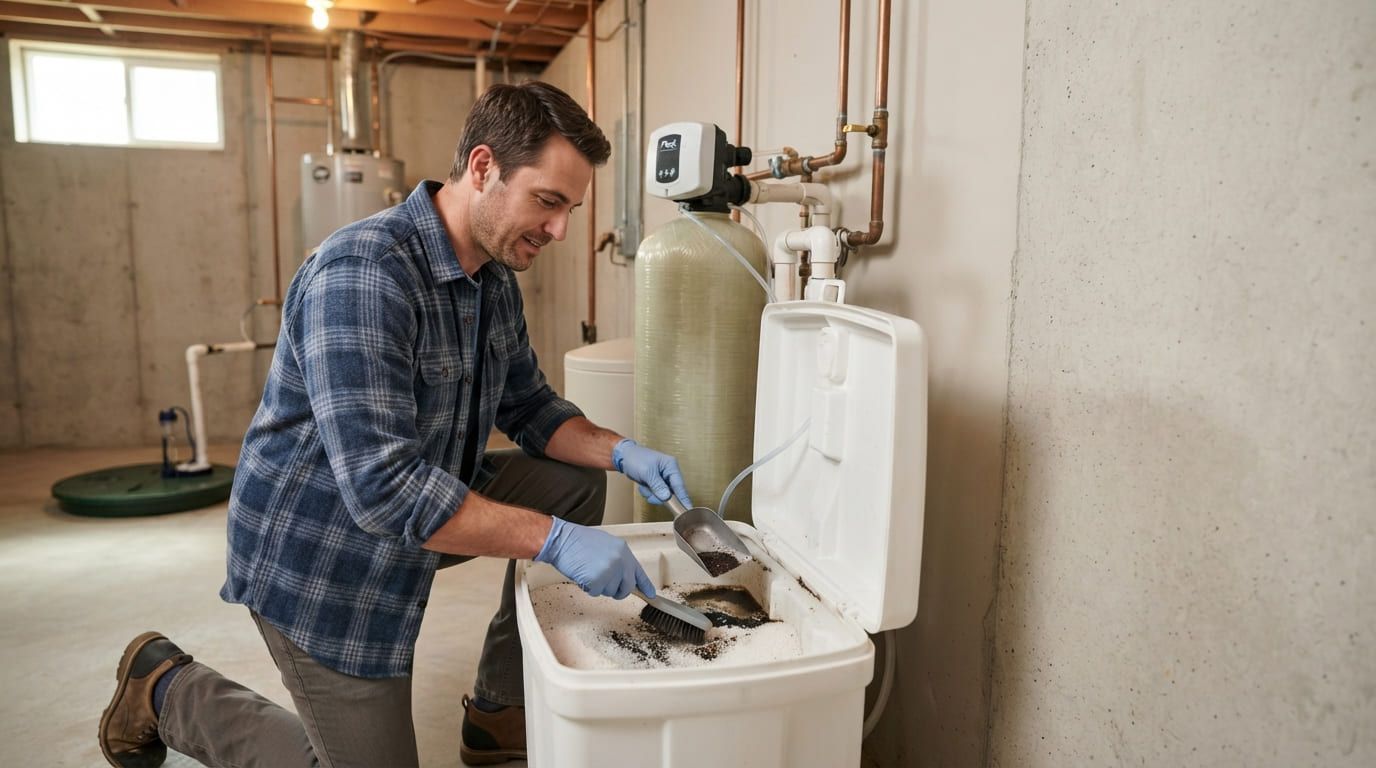
Why You Should Not Rely on a Water Softener to Remove Iron in Appleton WI
Iron in water can leave orange stains, discolor laundry, and affect plumbing fixtures. Learn why a standard water softener may not be enough and when dedicated iron filtration may be a better option for your Appleton home.
How Iron Gets Into Household Water
Iron can enter water naturally as it moves through soil and rock. It may also come from corrosion in plumbing components. Depending on the amount and form of iron present, homeowners may notice reddish brown stains around sinks, orange marks in toilets, metallic tasting water, or discoloration on white laundry.
For Appleton homeowners, the first step is understanding where the household water comes from. Appleton Water Utility treats water from Lake Winnebago and uses lime softening as part of its municipal treatment process. However, water conditions can differ for homes served by other systems or private wells, and plumbing inside a property can affect what comes out of the tap.
If you notice persistent staining or unusual water color, testing is more useful than assuming iron is the cause.
Why a Standard Water Softener Is Not an Iron Filter
A conventional water softener is designed primarily to reduce hardness minerals, especially calcium and magnesium. It uses resin beads to exchange those minerals for sodium or potassium ions.
Some softeners can also remove limited amounts of certain forms of dissolved iron under suitable conditions. However, that does not make them a reliable replacement for a dedicated iron treatment system.
Iron can create problems when it builds up inside the resin bed. Depending on its form and concentration, it may foul the resin, reduce treatment performance, and make maintenance more difficult. Iron particles that are already oxidized may also clog components or pass through equipment that is not designed to capture them.
Using a softener as the only treatment for significant iron levels can lead to recurring stains and unnecessary equipment maintenance.
Different Types of Iron Require Different Treatment
Identifying the form of iron in your water helps determine which treatment method is appropriate.
Dissolved Iron
Dissolved iron may not be visible when water first comes out of the tap. After exposure to air, it can oxidize and form orange or reddish brown particles. A suitable iron filtration system can often address this problem, but the correct equipment depends on the concentration and other water characteristics.
Particulate or Ferric Iron
This form of iron has already oxidized and appears as visible particles. It may cause cloudy water, sediment, and staining. Depending on the particle size and water conditions, sediment filtration or an iron filtration system may be needed.
Iron Bacteria
Iron bacteria can create slimy deposits, unpleasant odors, and reddish brown buildup in plumbing or well equipment. This is different from simply having dissolved iron in water. Proper testing and treatment are important because ordinary softening alone will not solve the underlying problem.
A water test can help distinguish these conditions and prevent you from choosing equipment that does not match the issue.
Signs Your Appleton Home May Have an Iron Problem
Iron is one possible explanation for several common water complaints. Watch for these signs:
- Orange or reddish brown stains around toilets, sinks, tubs, and shower surfaces.
- Rust colored marks on light colored clothing after washing.
- Metallic tasting water or discoloration that appears after water sits.
- Sediment or particles collecting in fixtures and filters.
- Slime or unusual buildup in well equipment or plumbing.
These symptoms do not prove that iron is present. Corroding pipes, sediment, manganese, and other water quality issues can cause similar problems. Testing the water is the best way to identify the source.
What Treatment Options May Work Better?
The right treatment depends on the type and concentration of iron, the water's pH, and whether other minerals or contaminants are present.
Dedicated Iron Filtration
An iron filter is designed to target iron more directly than a conventional softener. Some systems oxidize dissolved iron so it can be captured by a filter, while others use specialized filter media. The appropriate design depends on the water test results.
Sediment Filtration
If the problem involves particles already suspended in the water, a sediment filter may help capture them. However, ordinary sediment filters may not remove dissolved iron unless it is first converted into a filterable form.
A Combined Treatment System
Some homes benefit from dedicated iron treatment followed by water softening. Treating iron before it reaches the softener can help protect the resin and allow each piece of equipment to perform its intended job.
Do not choose a system based only on staining or appearance. A qualified water treatment professional can use test results to recommend suitable equipment and maintenance requirements.
Should You Test Your Water Before Buying Equipment?
Yes. Testing helps determine whether iron is present, how much is in the water, and whether other conditions may affect treatment. For a private well, testing can be especially important because water chemistry may differ considerably from the municipal supply.
If your home receives Appleton municipal water, review the water quality information from the utility and consider testing a sample from your own tap if you have persistent staining or unusual water conditions. A home test can help investigate issues related to household plumbing or other factors that a citywide report may not explain.
The goal is to identify the actual cause before investing in a water softener, iron filter, or replacement equipment.
Find the Right Water Treatment Solution in Appleton WI
Iron related staining can be frustrating, particularly when ordinary cleaning products do not prevent it from returning. But a water softener is not always the right tool for the job. Identifying the form of iron and selecting suitable treatment can help reduce staining, protect plumbing equipment, and prevent unnecessary strain on a softener.
Appleton Water Softener helps homeowners in Appleton, WI explore water treatment options based on their household needs. If you suspect iron in your water, start with a water test and discuss whether dedicated iron filtration, water softening, or a combination of both is appropriate for your home.