
Appleton, Wisconsin
Water softeners for Appleton homes, starting with your own tap
Appleton Water Softener installs and replaces water softeners, and installs whole-house filter and softener systems, Iron Curtain iron filters and reverse osmosis drinking-water units. Sized to a test of your own tap, a softener cuts scale and spotting; how much depends on your water and settings.
Most Appleton homes drink Lake Winnebago water that the city has already lime softened, so the real question is how much hardness still reaches your fixtures. Some homes need no equipment at all.

Start here
City water and well water need different answers
Appleton's utility draws from Lake Winnebago and treats the water at its own facility. Its 2025 Consumer Confidence Report lists the steps: lime softening, filtration, ultraviolet light, fluoride and chlorine. Lime softening takes out a share of the calcium and magnesium before the water ever reaches your street. The report does not publish a finished-water hardness number, so we do not give one either.
What that means in practice is simple. Some city homes are happy with the water as it arrives. Others still see a dull film on glasses, a crust on the showerhead or scale in a tankless heater, and want softer water throughout the house. The only way to know which camp you are in is to test the water at your own faucet.
Homes outside the city system are a different case. A private well draws groundwater, and groundwater in northeast Wisconsin can carry its own hardness, iron or odor. Well owners should treat our city-water notes as background only and start from a lab test of their own well.
What hard water looks like
Signs worth testing for
Hardness shows up first where water is heated or left to dry. If you see two or three of these regularly, a test is worth the few minutes it takes.

White crust on fixtures
A chalky ring around faucet bases and showerheads that comes back a week after you clean it.

Cloudy glassware
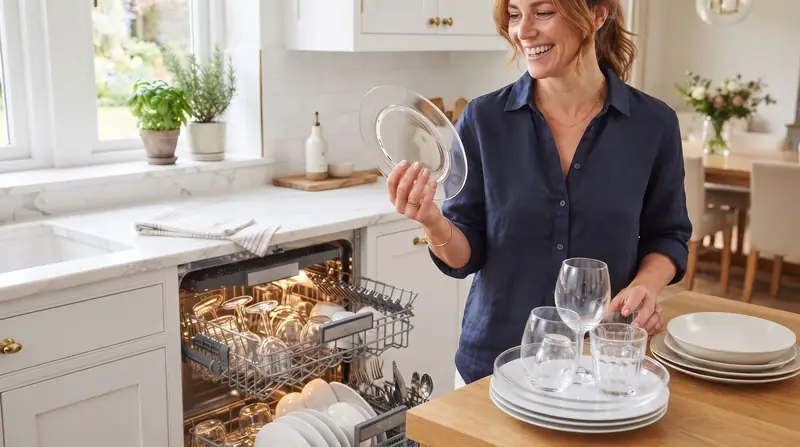
Spots and a gray film on glasses after the dishwasher, even with rinse aid.

Scale in hot-water gear
Popping in a tank water heater, or a tankless unit that needs descaling more often than its manual expects.
Not every spot is hardness
Some film on glassware is etching, which a softener cannot reverse. Orange or brown stains point to iron, and a softener is the wrong first tool for that. A blue-green ring suggests copper pipe corrosion, which is a plumbing question. Our Hard Water 101 guide walks through a vinegar check that tells mineral scale apart from the rest.
What we install
Three systems we install, three different jobs
The words get used loosely, so here is what each system does and the problem it is matched to. Each page goes into sizing, placement and upkeep.

Water softener
Swaps calcium and magnesium for sodium using resin and salt. We fit one for tested hardness and scale, and replace worn units.

Whole-house filter and softener
Adds a sediment or carbon stage ahead of the softener when a test also shows grit, taste or odor.

Iron filter
Oxidizes and traps iron before it stains. We fit one only when a lab test confirms dissolved iron, mostly on wells.
Before you buy
A short checklist for a sensible decision
- Test at the kitchen tap. Use cold water that has not passed through any existing softener or filter. Write the result down in grains per gallon.
- Name the symptom you want gone. Spots, scale, iron stains and taste are separate problems with separate fixes.
- Count people and fixtures. A softener is sized from hardness multiplied by daily use, not from the size of the house.
- Check the space. You need a drain, a standard outlet and room to lift a bag of salt into the brine tank.
- Plan the upkeep. Salt, a yearly look at the brine tank and an occasional check of the settings are part of owning one.

Everyday differences
What softer water changes, and what it does not
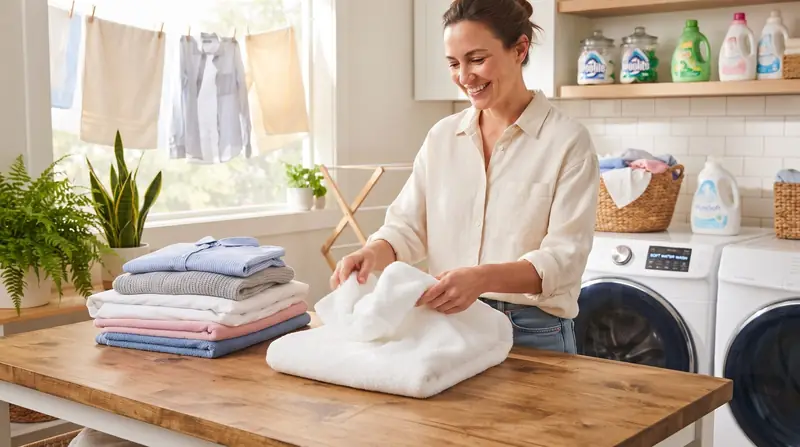
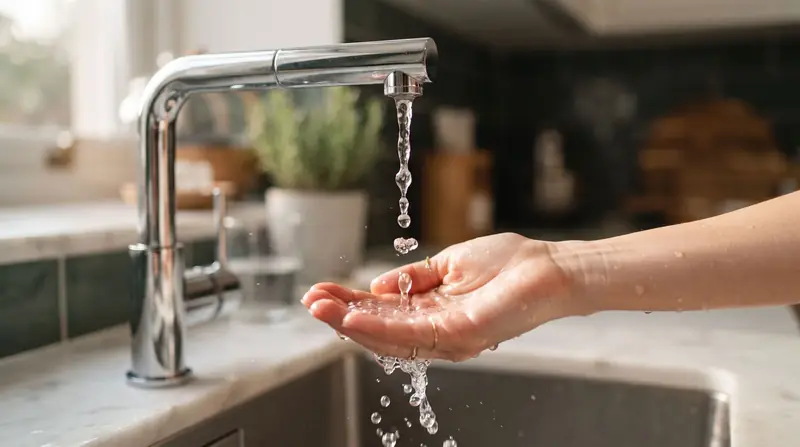
Softened water helps soap lather, rinses cleaner from glass and slows the buildup of scale in heaters and kettles. Laundry often feels less stiff. It does not make water safer to drink, it does not remove chlorine taste, and it adds a small amount of sodium in proportion to the hardness removed. Households watching sodium sometimes keep one unsoftened tap in the kitchen or add a reverse osmosis faucet for drinking, which we also install.
Common questions
Does Appleton soften its water already?
Yes. The city's 2025 water quality report lists lime softening among its treatment steps. That lowers hardness at the plant, but the report does not give the finished hardness, so test your tap to see what remains.
Will a softener remove chlorine taste?
No. Softening only removes hardness minerals. A carbon filter is the usual tool for chlorine taste and odor.
Is there a web form?
Yes. Use the contact form below to describe your water, or call 920-678-7902 to talk through a softener, a whole-house system or an iron filter.
Talk through your test result
Have a number from a test strip, or a symptom you cannot explain? Call to talk through whether a softener, a whole-house system, an iron filter or nothing at all fits your home.