
Guide
A water softener maintenance schedule for Appleton homes
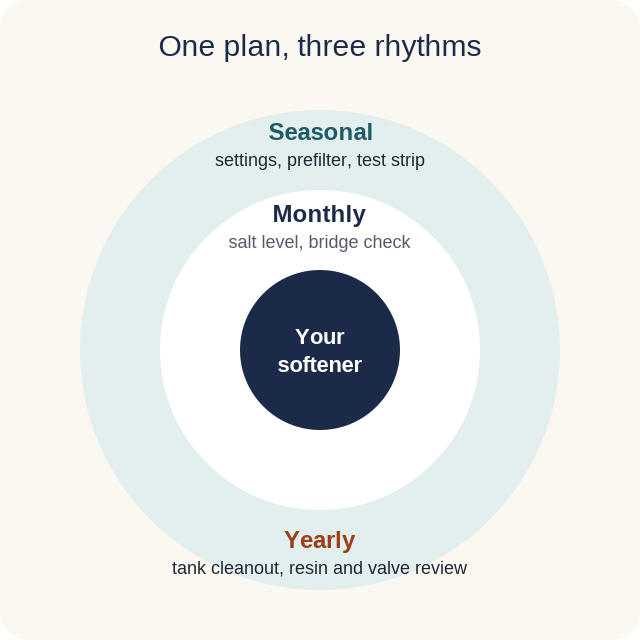
The short answer: most softener care fits into three rhythms. Each month, check the salt and look for a bridge. Each season, test the water and glance at the settings. Once a year, clean the brine tank and give the system a closer look. This guide turns that into a plan you can pin up next to the equipment, with notes on when to call for help.
Why a schedule helps
A softener runs out of sight, usually in a basement, and it fails quietly. When salt runs out or a bridge forms, the house slowly goes back to hard water and nobody notices until spots and scale return. A simple schedule catches those problems in minutes instead of months.
It also protects the money you spent. Regular checks keep the resin working, keep salt use reasonable and spot small issues, such as a stuck valve or a clogged drain line, before they turn into a flooded floor.
Every month
Monthly: five minutes with a flashlight

Salt level
Keep the tank between about a quarter and two-thirds full, with salt always above the water.

Bridge check
Press a broom handle gently into the salt. A hard crust over a hollow needs breaking up.

Leaks and power
Look for drips at the valve and bypass, and check the display has not reset after a power cut.
Each season
Seasonal: test and adjust
Four times a year, run a hardness strip on a cold kitchen tap that is supposed to be softened. It should read close to zero. If it does not, check the salt and the bridge first, then the settings.
Compare the hardness setting with a fresh test of the raw water if you have a sampling tap before the softener. Lake water and well water can both change through the year, and a setting that was right in spring may be off by fall.
If you have a sediment prefilter, check the pressure or the cartridge color. If you have an iron filter, confirm it is backwashing on schedule.
Once a year
Yearly: the deeper look
- Clean the brine tank. Remove sludge and old salt, wash and refill. Our brine tank guide has the steps.
- Clean the resin if needed. Homes with iron in the water benefit from a resin cleaner on the maker's schedule.
- Inspect the drain line and air gap. Make sure the line is not kinked, frozen or blocked.
- Check the injector and screens. If the manual allows, clean the venturi and screens that draw brine.
- Revisit the settings. Household size, hardness and regeneration time all change with life.
| When | Task | Time |
|---|---|---|
| Monthly | Salt level, bridge, leaks | 5 minutes |
| Seasonal | Test strip, settings, prefilter | 15 minutes |
| Yearly | Brine tank, resin, drain, settings | 1 to 2 hours |
Adjusting the plan for your water
The schedule above suits a typical home, but the water you start with shifts the emphasis. Two Appleton households can need quite different amounts of attention.
On Appleton city water
The city lime softens Lake Winnebago water before delivery, according to its 2025 report, so your softener handles what remains. Salt use is often moderate. Focus on the monthly salt check and the seasonal test, since a setting copied from a well-water manual may be higher than you need.

On a private well
Groundwater can carry more hardness and often some iron. Expect more salt, more frequent brine tank cleanouts and resin cleaning on the maker's schedule. Retest the raw water every year, because well chemistry can drift.
Whichever applies, keep the first year's log as your baseline. Once you know how many bags of salt a normal month takes and how quickly sludge builds, you can stretch or tighten the schedule with confidence rather than guessing.
Signs you need more than routine care
- Water stays hard after the salt and bridge checks.
- The brine tank fills with water and does not draw down.
- The control valve runs constantly or makes grinding sounds.
- Resin beads show up in faucet aerators.
- Salt use jumps sharply with no change in the household.
Any of these points to a part, setting or resin problem. Note what you see in your log and call to talk it through.

Should I switch the softener off when I go away?
Many demand-based units barely regenerate when nobody uses water. For long trips, the manual may suggest bypass; follow it.
What salt should I use?
Use the type the manual names. Higher-purity salt leaves less sludge. Some households use potassium chloride instead of sodium chloride; it costs more and may need a setting change.